10 Aug 2026
Competition, Consumer & Regulation
Where did my airplanes go? Federal Court finds against Perth Airport Pty Ltd for misleading conduct.

The Australian Competition and Consumer Commission (ACCC) has suffered a
significant setback in its latest consumer law enforcement action, with the Federal
Court dismissing allegations that mail-order retailer Magnamail Pty Ltd (Magnamail)
made false and misleading statements in relation to a “pre-draw” promotion.
In ACCC v Magnamail Pty Ltd [2026] FCA 969,1 the Court found that, despite the eye-catching language used in Magnamail’s marketing materials, consumers were not misled into believing they had already won or qualified for major prizes. Instead, when viewed in context, the promotions conveyed that consumers merely had an opportunity to win – a distinction that ultimately proved decisive.
Magnamail (first defendant) is a wholly owned subsidiary of Direct Group Pty Ltd (second defendant) (Direct Group).
Between 9 May 2022 and 7 July 2023, Magnamail operated a direct mail-order catalogue business in Australia selling goods such as clothing, homewares, gardening products, health aids and tools.2
To promote this catalogue business, Magnamail conducted 12 trade promotions, open for a fixed period of time (Trade Promotions) (Promotion Period).3 In each of the Trade Promotions, there was a major cash prize of either $10,000, $20,000 or $25,000 (Major Cash Prize). In all Trade Promotions other than one, labelled M271, there were Major Cash Prizes, other major prizes such as an Apple iPad Air (Major Prize), and minor prizes, such as a pen or cross-body bag (Minor Prizes). In the M271 Trade Promotion, there was only a Major Cash Prize of $25,000.4
The Trade Promotions were only available to selected customers, identified through a standard process. Magnamail gave evidence that the selected customers comprised customers who were on Magnamail’s mailing lists, regularly received marketing material from Magnamail, and had previously won Minor Prizes from previous trade promotions.5
For the majority of the Trade Promotions, the winners of the Major Prizes were pre-drawn from the pool of selected customers by an independent third party, Handling Matters Pty Ltd (Handling Matters).6
It was common ground that the pre-draws did not mean that any selected customer was the final winner of the prize. For a pre-drawn winner to receive a prize, they had to receive the promotional materials for the relevant Trade Promotion and enter into the Trade Promotion by placing an order from the relevant catalogue within the Promotion Period. In essence, the pre-drawn selected customer was only a “provisional winner” and in order to actually win a prize, they had to place an order within the required time period.7
Furthermore, although a customer may not have initially been eligible for a Major Prize or Major Cash Prize, each customer selected to participate in the promotion and who placed an order had a chance of winning that prize from a random second chance draw conducted by Handling Matters at the conclusion of the Promotion Period. That second chance draw occurred if the pre-drawn provisional winner did not place an order from the relevant catalogue within the Promotion Period.8

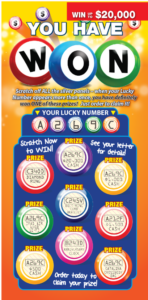
The ACCC alleged that the Trade Promotion conveyed certain representations and each of the representations was false, misleading and/or deceptive. Specifically, the ACCC alleged that Magnamail contravened ss 18, 29(1)(b), 29(1)(g), 29(1)(m) and 34 of Schedule 2 of the Competition and Consumer Act 2010 (Cth) (ACL). The ACCC further alleged that Direct Group were “knowingly concerned or party to the alleged contravention… which was undertaken on behalf of Direct Group”.9
At its core, the ACCC alleged that the representations made by Magnamail were:
false and/or misleading because there had been a pre-draw of the consumers who had a right to claim, were eligible for or had qualified for the Major Cash Prize or Major Prize (or a pre-draw of the winning claim number) prior to the distribution of the promotional materials. At the time these representations were made, other than the consumer who had been pre-drawn or received the promotional materials containing the pre-drawn winning claim number, no consumer who placed an order from the catalogue then had a right to claim, was then eligible for or had qualified for a prize that could be valued up to the amount of the Major Cash Prize.10
In defending against the allegations made by the ACCC, Magnamail contended that the original framework, concept and conduct of the promotions were presented to their external legal advisors and that this was a standard procedure prior to the publication of any trade promotions.11 Subject to the feedback Magnamail would receive from its legal advisors, the advertisements would be amended to align with the legal advice and then made public. Magnamail also stated that it presented the trade promotions to the regulatory bodies responsible for granting permits for lotteries and trade promotions and received their approval.12
The Court proceeded by undertaking a detailed analysis of each trade promotion and the allegations made by the ACCC.
Ultimately, the Court made several overarching findings leading to the conclusion that the ACCC’s allegations must fail.13
The Court considered how an ordinary and reasonable member would have understood the promotional materials and through this found that the dominant message conveyed by the promotional materials, when viewed as a whole, was that customers could or had the opportunity to claim a prize in a prize draw which could be a major prize, representing a chance to win rather than an immediate entitlement to receive a prize.14
The Trade Promotions included a scratch and win style promotion. The ACCC alleged that the promotional material conveyed the representation that the selected customers had, at that time, a right to claim, were eligible for, or had qualified for a prize if they purchased a product from the catalogue.15 The Court wholly disagreed with these allegations, likening the promotional material to “Instant Scratch-It” cards already on the market. The Court found that ordinary and reasonable members were aware of the format of scratch and win style promotions and were aware that they had an opportunity or chance of winning an available prize but ultimately the outcome had been pre-determined.16
In reaching its decision, the Court also considered the nature of the selected customers targeted by the promotional material. At [129], the Court held:
The ACCC’s approach is undermined by the fact that (a) the selected customers were repeat customers with a history of regularly receiving marketing materials from Magnamail, (b) the selected customers had participated, and won a Minor Prize, in previous trade promotions conducted by Magnamail in which Major Prizes were also available to be won, and (c) the products in the Magnamail catalogues were not “high end” products but low cost items.
The Court found the selected customers’ familiarity with Magnamail’s promotional advertisements meant that an expectation that they had an immediate right to claim a Major Prize would have been an “extreme and fanciful reaction”.17
The Court ultimately concluded that the ACCC had failed to establish that Magnamail and Direct Group had contravened the ACL.18 Following from this conclusion, the Court dismissed the ACCC’s Amended Originating Application and ordered that the ACCC pay Magnamail’s costs.19
This case carries several important lessons for businesses who conduct promotional marketing:
Thanks to law graduate Vinuli Perera for her research and contribution to this article.
The information contained in this publication does not constitute legal advice and should not be relied upon as such. You should seek legal advice in relation to any particular matter you may have before relying or acting on this information. The Lavan team are here to assist.
"*" indicates required fields